Designing AI Graphic Novels as a System, Not a One-Off
- The Handsomest Nerd
- Dec 31, 2025
- 2 min read


I’ve been quietly building a small collection of short graphic stories — some seasonal, some experimental, all intentional.
They aren’t traditional comic books. They aren’t AI art dumps either. It's more like designing Graphic Novels as a System using AI Workflows.
Each piece is an exercise in structure, consistency, and narrative control — using modern tools to explore how visual storytelling can be designed like software.
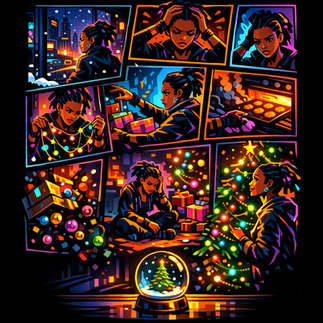
The Christmas Story: Designing Graphic Novels as a System

The Handsomest Nerd’s Christmas Story is a digital Christmas card. But systematically created and distributed.
Most people saw the final result.

What mattered more to me was everything underneath it:
Maintaining character consistency across panes
Controlling lighting and mood scene to scene
Keeping pacing tight inside a limited page count
Designing visuals that read like a story, not a slideshow
That project validated something important:AI works best when you give it structure, not freedom.
Graphic Novels as a Creative System
Instead of starting with “make something cool,” I start with constraints:
Visual rules
Narrative beats
Emotional tone
Reusable character logic
Once those are locked in, the creative process becomes faster and more intentional. This is a repeatable workflow.
The result isn’t randomness — it’s repeatability.
That’s the same mindset I bring to web development, branding, and digital products.




Why This Matters (Beyond Art)
This isn’t just about comics.
It’s about:
Designing creative workflows
Building reusable systems
Understanding how humans actually experience visual information
Whether it’s a website, a brand, or a short story — the principles are the same.
Storytelling is structure.
What’s Next
The Christmas story was only one entry point.
More short-form graphic narratives are coming — different tones, different concepts, same foundation.


If you’re interested in how creative systems are built (not just the output), you’re in the right place.



Comments